ABS Condition Assessment Program (CAP)

Services

ABS Condition Assessment Program (CAP)

Demonstrate the reliability of your aging fleet and increase your commercial earning potential.


The ABS Condition Assessment Program (CAP) is the industry‑recognized method for demonstrating a vessel’s physical condition, maintenance quality, and suitability for charter—especially for tankers, gas carriers, bulk carriers, containerships and offshore support vessels (OSVs). Many major charterers require or prefer CAP 1 or CAP 2 ratings, making CAP a powerful tool for maximizing the commercial opportunities of aging assets.


Condition Assessment Program (CAP) for Aging Vessels


Preparing for an ABS Condition Assessment Program (CAP) Survey

Download Now

ABS CAP provides a technical evaluation that goes above standard class requirements, offering charterers a detailed view of a vessel’s overall condition.
The program includes:

  • A comprehensive condition assessment survey
  • Ultrasonic hull gauging and structural evaluation
  • Machinery and cargo system testing
  • Strength and fatigue analysis of critical structural components


Developed originally by the oil industry, CAP is a voluntary program designed to assess the ongoing fitness of older ships and typically takes about 10 days.


*Free access to all cargo and ballast spaces must be provided.

Condition Assessment Program Details

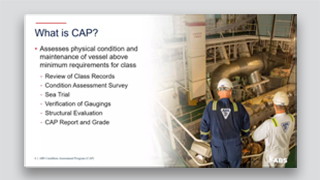
Assess physical condition and maintenance of vessel above the minimum requirements for class:

  • Review of Class Records
  • Fatigue Assessment
  • Condition Assessment Survey
  • Verification of Gaugings
  • Structural Evaluation
  • CAP Report and Grade

When is CAP Rated Required?

  • Most charterers require CAP for vessels 15 years and older.
  • ABS recommends coordinating CAP with the vessel’s Special or Intermediate Class Survey to reduce downtime and cost.
  • Thickness measurements taken within the past 12 months may be used if verified by ABS.

How Is a CAP Rating Determined?

ABS surveyors complete:

  • Most charterers require CAP for vessels 15 years and older.
  • ABS recommends coordinating CAP with the vessel’s Special or Intermediate Class Survey to reduce downtime and cost.
  • Thickness measurements taken within the past 12 months may be used if verified by ABS.

How Is a CAP Rating Determined?

ABS surveyors complete:

  • Full condition assessment with graded items and photographic records
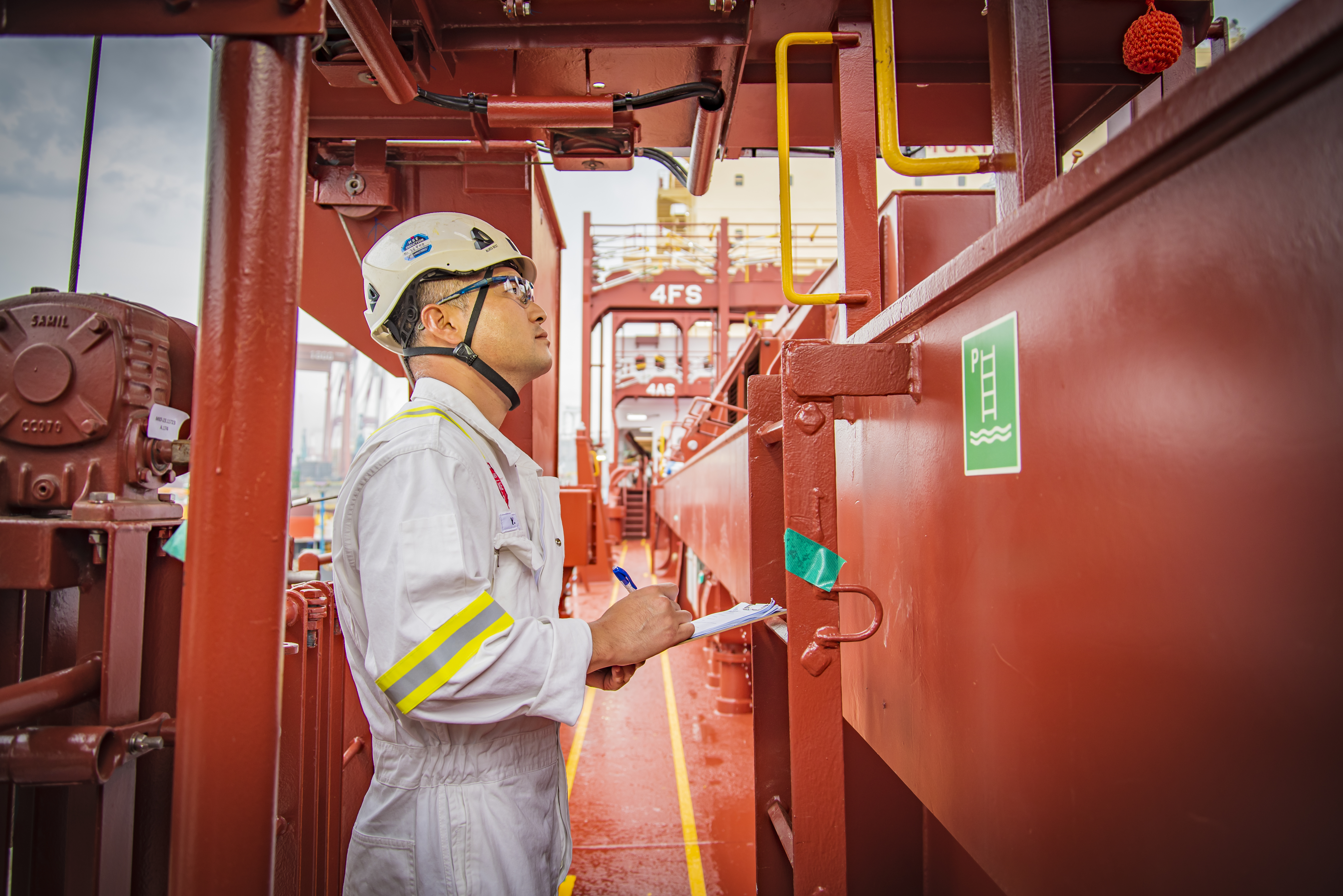
  • Close-up inspections of cargo and ballast spaces
  • Ultrasonic thickness measurements (minimum three full girth belts within 0.4L)
  • Structural evaluation using as‑built scantlings and vessel history
  • Machinery and systems function testing (steering, propulsion, electrical power, pumps, venting, and more)

ABS technical specialists consolidate survey documentation, structural assessment, and fatigue evaluation to determine the final CAP grade.

Operational & Commercial Benefits

  • Reduced time off‑hire
  • Demonstrates maintenance quality and charter‑readiness
  • Enhances vessel appeal for long‑term contracts and charterer vetting
  • Provides recommendations beyond class to meet charterer expectations
  • Identifies and mitigates high‑stress structural areas
  • Supports long‑term hull integrity planning
  • May increase vessel resale value

Pre‑CAP Survey

  • Get a clear understanding of the CAP process before your official survey
  • Onboard visit by an ABS CAP Lead Surveyor to:
    • Review survey areas and items
    • Discuss procedures with crew
    • Identify maintenance or preparation needs
    • Support efficient planning and scheduling
  • Ideal for first‑time CAP participants or anyone seeking a smoother CAP experience
  • Flexible scope tailored to your vessel and needs
  • Includes a post‑visit debrief (virtual or onsite) with observations and recommended actions
  • Optional written summary provided upon request
  • Advisory only — does not issue certificates or affect official CAP ratings

During Your CAP Survey

  • Flexible scheduling (while sailing, during drydock, or combined approach)
  • Single point of contact through regional CAP coordinators
  • Eligibility for remote inspection technologies

Reporting

  • Industry‑leading fast turnaround
  • Provisional CAP certificates available for early charterer engagement
  • Globally aligned grading and assessment standards

Many leading charterers now require a CAP 1 or 2 rating that includes a detailed Fatigue Assessment.

ABS evaluates the cumulative fatigue impact on critical structures—quickly, accurately, and cost effectively—supporting safer, more reliable vessel operation.

The ABS Edge

Understanding CAP

Gain valuable insights into the Condition Assessment Program as the ABS CAP team explores current industry needs and our vision for the future. Pair this insightful webinar with our comprehensive Preparation Guide to learn best practices and common areas of focus for a successful survey.

What is CAP?

Cargo owners and many of the largest charterers typically require a Condition Assessment Survey.  Charterers prefer a CAP Grade of 1 or 2 to fix older vessels identified to carry their cargo. The commercial opportunities for an older tanker, gas carrier, bulk carrier, and more recently, a containership and an offshore supply vessel without a satisfactory CAP rating, may be limited.

The Condition Assessment Program is a voluntary service that provides an independent evaluation of the condition of a vessel from which third parties can assess the suitability of an asset for a charter based on its current condition as opposed to its age. 

The program provides a charterer with a technical evaluation of the physical condition and maintenance of a vessel above the standard requirements for class.  CAP is applicable to oil tankers and bulk carriers of 15 years of age and above, but may be used for other vessels at different ages.

The program includes a detailed survey of the vessel's hull structure including verification of gaugings as well as extensive testing of the vessel's machinery, equipment and cargo systems. This information, combined with a strength and fatigue engineering analysis, leads to a numeric rating being assigned to the vessel ranging from 1 (Very Good) to 4 (Unsatisfactory).


Need more info? We're here to help! Have a member of the ABS team contact you.


Condition Assessment Program Details

Assess physical condition and maintenance of vessel above the minimum requirements for class:

  • Review of Class Records
  • Fatigue Assessment
  • Condition Assessment Survey
  • Verification of Gaugings
  • Structural Evaluation
  • CAP Report and Grade

Why CAP with Fatigue Assessment?

CAP is able to quickly and cost-effectively assess the cumulative impact of fatigue on a vessel's critical structural components. The major charterers have introduced even tougher CAP standards as a requirement for charter. They demand that the CAP 1 or 2 ratings include a detailed fatigue assessment. 


ABS CAP - Helping You Meet Charterer Requirements

Watch Now

Interested in learning more about the benefits of ABS CAP? Watch the on-demand webinar.

Preparing for an ABS Condition Assessment Program (CAP) Survey

Download Now