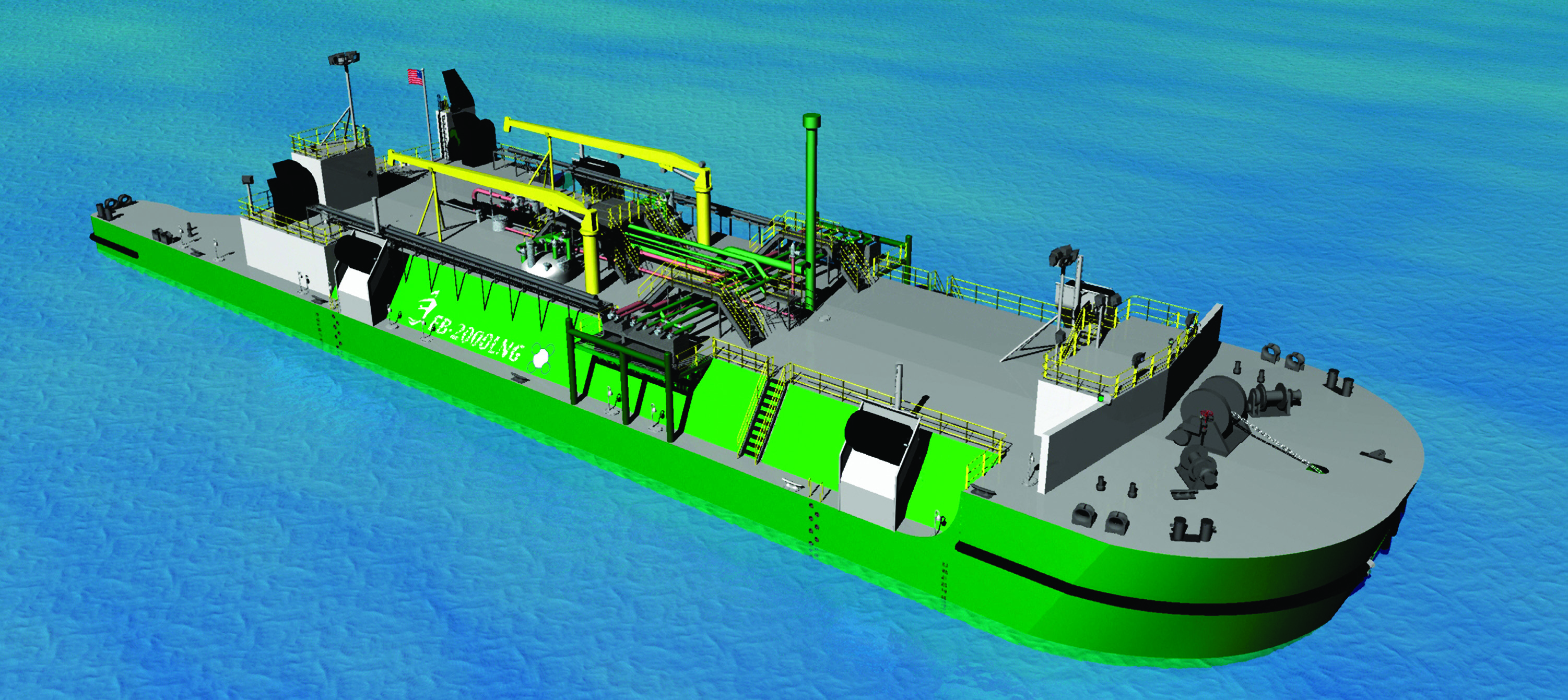
ABS Grants AIP for LNG Bunker Barge

With the demand for LNG-fueled vessels on the rise in North America, organizations across the region are developing the technologies and practices needed for wide-scale adoption of liquefied natural gas (LNG) as a marine fuel. As with most shifts of this magnitude, there are multiple drivers for the move toward gas-fueled vessels.

For one thing, LNG virtually eliminates SOx and particulate matter emissions, and its technical application will transform operational fuel efficiency and environmental performance in terms of reduced NOx and CO2 emissions. For vessels operating within the North American Emission Control Area (ECA), this is of particular importance because by 2015, the sulfur emissions limit will drop to no more than 0.10%. Another plus for shipowners is cost. At present, LNG is considerably less expensive than low sulfur marine fuels.

On the surface, it is evident why using LNG as fuel has appeal, but moving to LNG from traditional fuels is not a simple undertaking. There are challenges, the most immediate of which is the fact that adoption is not possible without the infrastructure required to supply this growing market.

As is often the case, forward-looking companies are moving to address the hurdles that stand between industry and the adoption of new technology. And as has happened often in the past, some of the most innovative are looking to ABS to move into new areas with them.

Elliott Bay Design Group (EBDG), based in Seattle, Wash., is one of the first movers in this sector. The company, made up primarily of marine engineers and naval architects, has 25 years of experience solving challenging industry problems. EBDG, which describes itself on the company website as creating “accurate, realistic and creative designs” that can move “from idea to design to shipyard to service,” has developed what it hopes will be a solution to the LNG bunkering challenge.

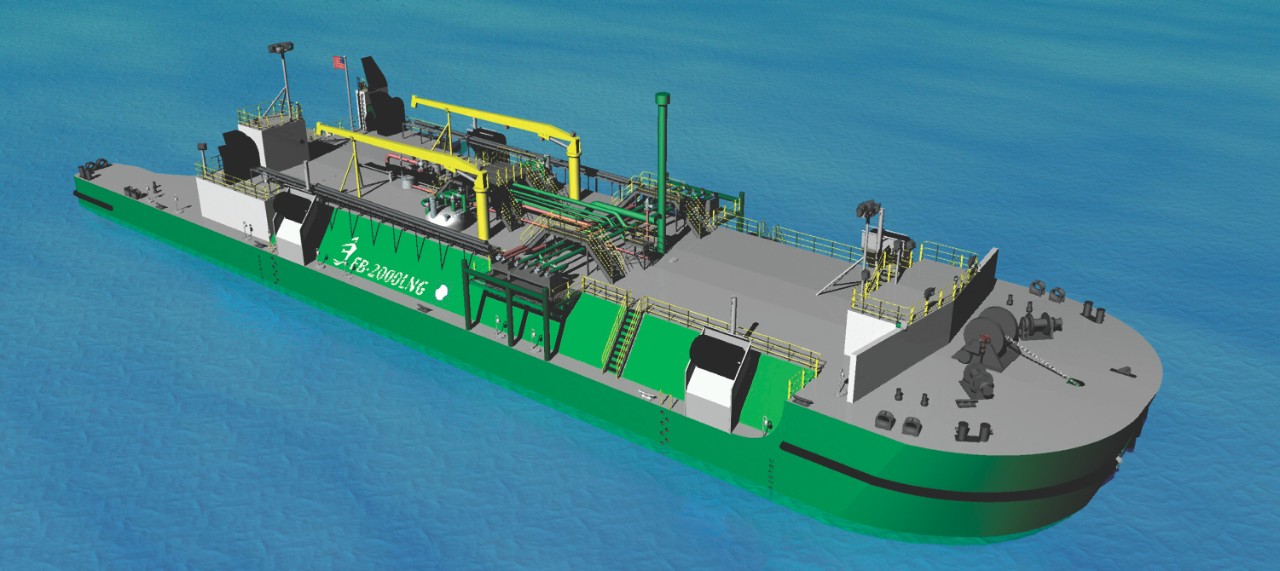
The company has designed a 2,000 cubic meter LNG combination bunkering barge design and has appealed to ABS to provide Approval in Principle.

At ABS, our goal is to help designers, shipyards and operators bring new and novel concepts to the marketplace in a safe and effective manner.

The EB-2000 LNG is one of several LNG barge designs developed by EBDG to meet the growing demand for efficient and cost-effective refueling of LNG powered vessels. The innovative 257-ft. EB-2000 was designed for use as an articulated tug barge or to be towed. The unit features a marine diesel fuel cargo tank for refueling dual-fuel vessels.

The EBDG combination bunkering barge takes an innovative approach to meeting the challenges of LNG bunkering, an obstacle that must be overcome for LNG fueled operations to become truly effective in the United States.

This latest step by EBDG is a significant one that will move industry along the path to broader adoption of LNG as fuel.