Shanghai Office Hosts Seminar on Advances in Offshore Geotechnical Engineering

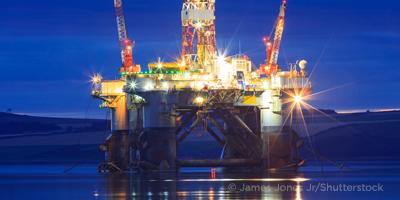
With water depths increasing from less than 200m in the 1980s to 3,000m and more today, new challenges continue to arise for offshore engineers, especially in the discipline of geotechnical engineering. While it is acknowledged that characteristics of seabed soil conditions increase installation and operation risks for deepwater structures, challenges are not restricted to deep water. In fact, statistics indicate that jackups have the highest reported accident rate, with 25% to 30% resulting from issues with soils and foundations.

Interest in developing China’s offshore has led to considerable domestic investment in research that will validate new foundation and anchoring systems for offshore engineering.


Recognizing that there was interest in knowing more about geotechnical engineering, the ABS China Offshore Technology Center hosted a seminar in Shanghai on 16 December to address advances in offshore geotechnical engineering. The seminar attracted attention from universities and industry, including Zhejiang University, South China University of Technology, Marine Design & Research Institute of China (MARIC), China Offshore Oil Engineering Co, Ltd. (COOEC) and CNOOC Research Institute.

ABS Senior Engineer of Offshore Technology Dr. Zhang Xi-Ying, who specializes in jackup spudcan foundations, anchors for deepwater mooring, gravity platforms and soil-structure interaction, shared from her eight years of experience, describing some of the general aspects of offshore geotechnical engineering, including jackup spudcan foundation, anchoring systems and subsea foundations. She also introduced ABS’ new guidance notes on geotechnical performance of spudcan foundation and mooring anchors. Some numerical approaches for structure-soil interactions, such as spudcan penetration into single or double-layered seabed soil and pipeline lateral buckling, were presented as well.

The seminar also covered a realistic design of spudcan penetration resistance and spudcan soil fixity, analytical design of drag anchor trajectory and capacity and geotechnical and structural design of dynamically installed piles – widely regarded as the most promising deepwater anchor concept in terms of the cost effectiveness and ease of installation.

This seminar served as a vehicle for sharing ABS’ extensive experience in this specialized sector, emphasizing the implications of geotechnical analysis for offshore design criteria, which are in parallel with API, ISO and industry practice.