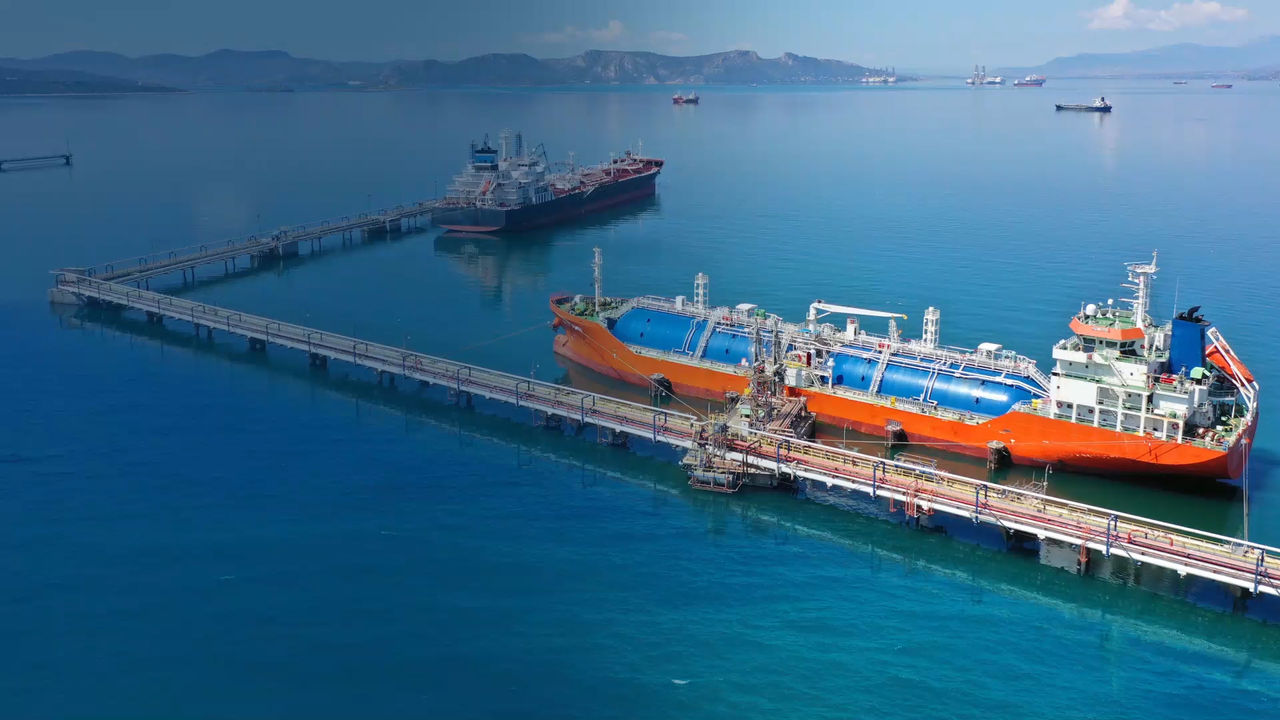
With delivery of the first containership in the series just a few weeks away, the marine industry spotlight is shining brightly on TOTE Maritime’s award-winning 3,100 TEU containerships currently under construction at NASSCO’s shipyard in San Diego.
Classed by ABS, the world’s first LNG-powered containerships received their latest promotion last week through a video posted on the American Natural Gas Association’s website.
Accolades have been pouring in for technically advanced ships ever since their announcement, showcasing an innovative design and the support ABS is providing to companies which are determined to lower the impact their ships have on the environment as they go about the business of delivering 90% of the world’s trade.
TOTE Maritime says the new ‘Marlin’ class ships will reduce sulfur dioxide emissions by 98%, particulate matter by 99%, nitrous oxide and carbon dioxide by 71% when compared with the ships it currently operates on the Jacksonville-Puerto Rico trade lane where they will be deployed.
ABS’ commitment to providing technical support for industry-leading projects such as TOTE’s Marlin class ships has generated unprecedented demand for its services; 29% of the current global orderbook for LNG ships is contracted to ABS class, the largest single share among classification societies.
According to NASSCO, the Marlin class ships are the most advanced vessels they have ever built at their San Diego yard. NASSCO is a family business with management who view the new LNG-fueled ship types as a major investment in the future.
Moreover, they are proud that these precedent-setting ships are being built at an American shipyard, by American workers and provide 600 quality American jobs.


For their part, the owners have been quick to promote the environmental benefits of LNG as a fuel source.
“Ships this big, running this clean, will be much better for the environment,” said Mark Tabbutt, Chairman of Saltchuk, Tote Maritime’s parent company. “This transition to natural gas will change the course of our industry for the better.”

“I’ve worked in the industry for 20 years and this is the single biggest innovation that I have seen,” Tabbutt said. “We are the first company to use natural gas for cargo shipping, but others are already following. We are proud to be leading the way. It means great things for our company, our industry and the environment.
In general, based on current trends, ABS remains optimistic about the future of LNG as an increasingly popular fuel for shipping. The numbers of LNG-fueled conventional cargo ships are still small, but they are growing; owners are actively exploring its potential, governments around the world are promoting its use and more ports are building the bunkering infrastructure.
The full video on TOTE’s new LNG-fueled containerships can be found here.