Brief: MSC 111

Session Dates 13 – 22 May 2026


Overview: MSC 111


The IMO Maritime Safety Committee (MSC) held its latest session, making substantive progress across a broad range of maritime safety, security, and operational regulatory areas. The key milestones of this session were the adoption of a non-mandatory International Code of Safety for Maritime Autonomous Surface Ships (MASS Code) addressing the growing need for a standardized framework to regulate this developing technology, the introduction of the Very High Frequency (VHF) Data Exchange System (VDES) as an alternative to the traditional Automatic Identification System (AIS), enhancing operational capabilities of the technology in the sector, and the allowance of the use of remote inspection techniques for bulk carriers and oil tankers.

This Brief provides an overview of the more significant issues progressed at this session.


Key Takeaways

  • Non-mandatory MASS Code adopted: The Committee adopted the non-mandatory International Safety Framework for Maritime Autonomous Surface Ships. An Experience-Building Phase (EBP) will now follow to monitor real-world implementation, driving the development of the mandatory MASS Code which is targeted to enter into force on 1 January 2032.
  • Amendments to Mandatory Instruments adopted: The Committee adopted amendments across the following mandatory instruments, entering into force on 1 January 2028:
    • SOLAS, HSC Codes: VHF Data Exchange System (VDES) is permitted as an alternative to AIS.
    • 2011 ESP Code: Remote Inspection Techniques (RIT) allowed for bulk carriers and oil tankers.
    • LSA Code: Amendments for Lifejackets, Lifeboats and Launching Appliances.
    • IMDG Code: Amendment 43-26 to the IMDG Code (update for the carriage of lithium/sodium-ion batteries and other dangerous goods).
    • IP Code: Increase industrial personnel weight from 75 kg to 90 kg.
    • Load Line: Address guard rail and bulwark requirements around exposed decks.
  • IGC Code amendments: Consolidated amendments to the IGC Code were approved for submission to MSC 112 for formal adoption. The application of the amended Code to new ships will explicitly follow the "three-date system" format.
  • “One Ship, One Code” policy: To accurately reflect this policy decision and prevent any interpretative ambiguity, amendments to SOLAS and IGF Code were approved at this session with a view to be submitted to MSC 112 for adoption. Where alternative fuels fall outside IGC scope, a combined, administration‑approved approach is introduced, supported by aligned SOLAS and IGF amendments.
  • Ammonia cargo as fuel: Approved interim Guidelines for ammonia cargo as fuel establishing a goal‑based safety framework to enable its use on gas carriers, supplementing the IGC Code with risk‑based design and operational requirements.

  • Hydrogen as fuel: Approved interim Guidelines for hydrogen as fuel establishing a goal‑based safety framework, aligned with the IGF Code, to support its safe adoption across ship systems.
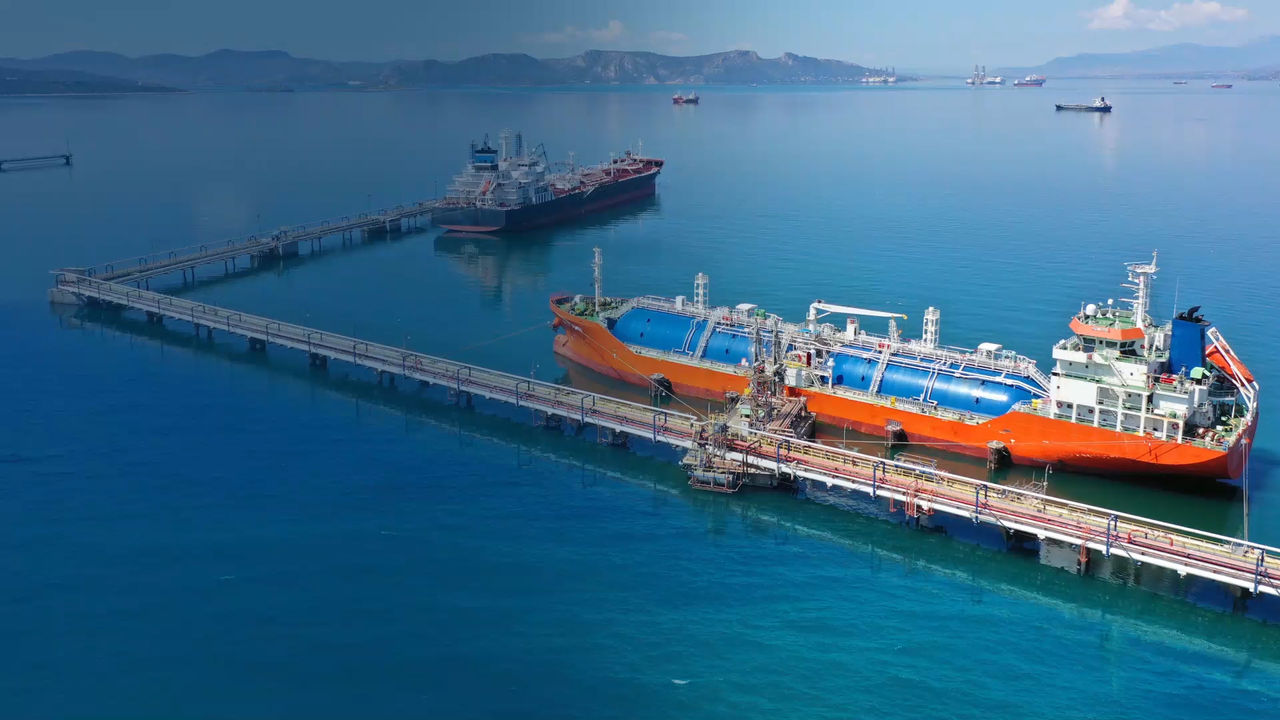
  • Liquified hydrogen in bulk: Adopted revised interim Recommendations for liquefied hydrogen carriage in bulk (revoking MSC.565(108)) strengthening the IGC framework by addressing the unique risks of LH2, particularly through new requirements for enhancing structural integrity, safety controls, and system definitions, providing a more robust and consolidated baseline for LH2 transport.
  • GHG safety work plans: Endorsed the safety regulatory work plans developed by the CCC and SDC Sub-Committees, agreeing on priority items to support the reduction of GHG emissions from ships using new technologies.
  • Escape trunk below bulkhead deck: Agreed to issue a revised circular (MSC.1/Circ.1689/Rev.1) confirming that the term "lower part of the space" in SOLAS regulations II-2/13.4.1.1 and 13.4.2.1 should be regarded as either the lowest deck level or a platform or passageway.