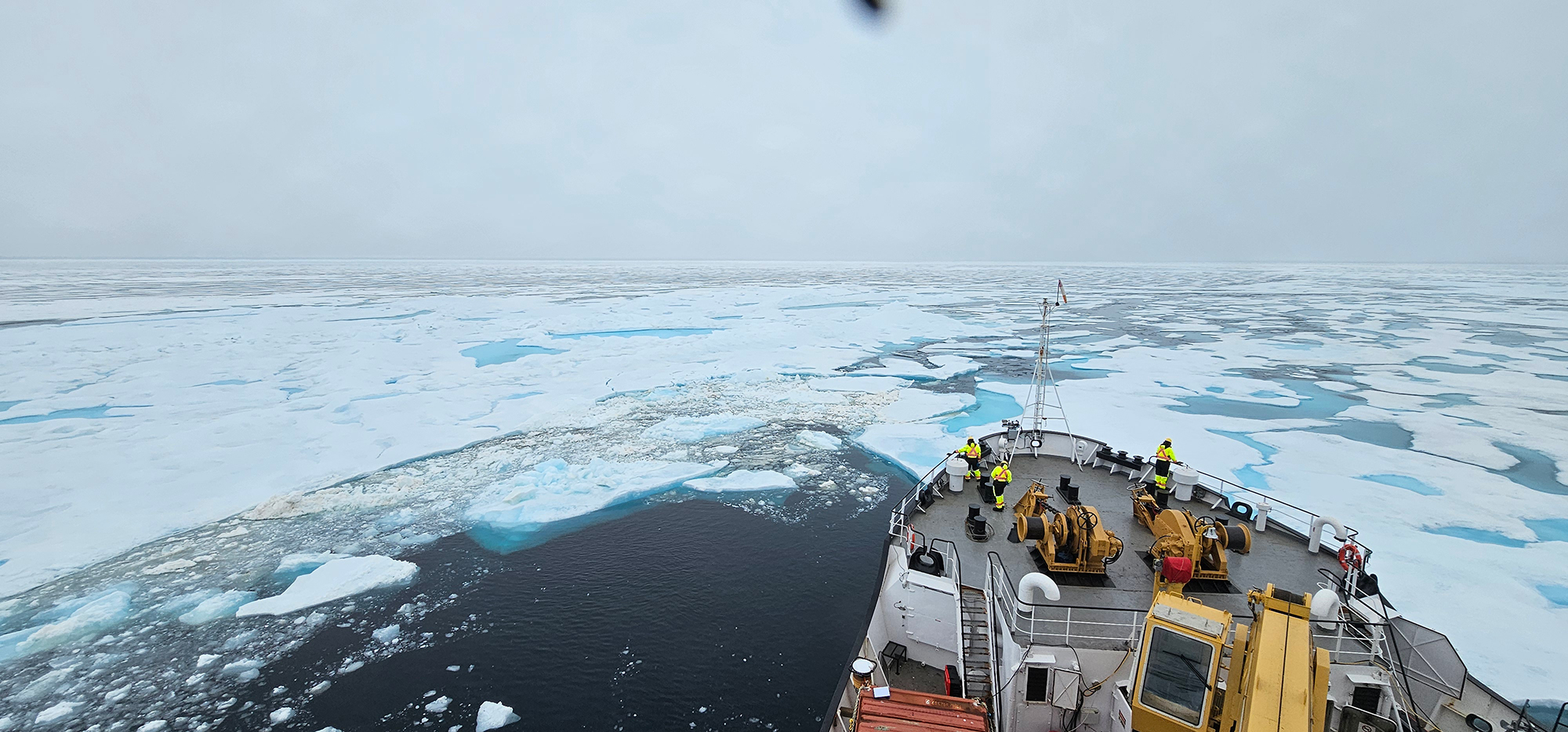
The Arctic remains one of the most challenging operating environments in the world. Variable ice conditions, limited visibility and rapidly changing weather demand reliable situational awareness and decision support capabilities. To help address these challenges, ABS recently joined the ICENAV team on the second leg of their expedition, continuing the development and real-world testing of the ICESIGHTS system aboard the Canadian Coast Guard Ship (CCGS) Henry Larsen.
Managed by the Defence Research and Development Canada (DRDC) agency, the ICENAV program brings together government, research and industry partners to advance Arctic operational capabilities. During this latest voyage, ABS deployed ICESIGHTS to collect additional operational data and evaluate system performance in real-world Arctic conditions. ICESIGHTS was one of the recipients of the Innovation for Defence Excellence and Security (IDEaS) Arctic Mobility Challenge, supporting continued development of technologies for safer Arctic operations.
Testing Technology Where It Matters Most
Field deployment remains a critical step in the development process.
Following installation aboard the CCGS Henry Larsen, the ICESIGHTS system began collecting data while the vessel operated through Foxe Basin, Fury and Hecla Strait, Peel Sound, Bellot Strait and surrounding Arctic waters.
The voyage presented a diverse range of operating environments including:
- Heavy icebreaking operations
- Fog and reduced visibility conditions
- Ice floe monitoring activities
These conditions allowed the project team to evaluate how the system performs outside controlled testing environments and identify opportunities for future enhancements that will help support ongoing artificial intelligence (AI) model training and refinement.
Expanding Understanding of Arctic Ice Conditions
ICESIGHTS operated alongside a variety of scientific and operational activities including ice coring programs, ice thickness surveys, growler monitoring, drone operations and acoustic research.
This environment provided opportunities to compare and correlate system observations with other forms of Arctic data collection. During several ice stations, thick multiyear ice was examined while the vessel navigated some of the most demanding ice conditions encountered during the expedition.
These missions continue to highlight the importance of understanding a wide spectrum of ice features, from smaller growlers to large multiyear formations and significant pressure ridges. Capturing data through the ICESIGHTs system’s Lidars to determine size floes helps create a richer operational dataset.
Exploring Multisensor Capabilities
Another area of focus during leg two involved evaluating complementary sensing technologies that may enhance Arctic situational awareness under challenging environmental conditions.
During periods of fog and reduced visibility, the team explored methods for collecting additional observational data to better understand how different sensor technologies may contribute to future system performance.
These activities are part of ABS's broader effort to investigate technologies capable of supporting operational awareness in conditions that often challenge traditional visual observation methods.
The work reflects a key principle of the ICESIGHTS program: combining multiple streams of information to create a more comprehensive understanding of the operating environment.
Continuous Improvement Through Operational Experience
Beyond validating performance in ice, this leg of the expedition helped the team further assess deployment efficiency, system configuration and the user experience aboard an operating vessel.
Leg two offered valuable insights into data management, hardware configuration, sensor integration and operational workflows and lessons learned from the voyage are already helping shape future system development plans and priorities.
ABS' Continued Commitment to Arctic Innovation
Participation in these expeditions demonstrates ABS' ongoing commitment to Arctic research, innovation and collaboration. By engaging directly in field trials and operational testing programs, ABS continues to contribute to the development of technologies designed to support safer and more efficient operations in challenging environments.
The voyage also reinforces the importance of partnerships among industry, government and research organizations. Progress in Arctic technology development depends on combining expertise, sharing knowledge and validating new concepts through real-world experience.
---------------------------------------------
ICESIGHTS (Ice Classification and Evaluation by Sensor Information Gathering and other High-Tech Solutions) is a next-generation Ice Load Monitoring System being developed by ABS Canada, Memorial University of Newfoundland, and Railotech. Using advanced sensors and artificial intelligence, ICESIGHTS is designed to detect, classify, and track ice conditions and ultimately predict hull ice loads before contact occurs, helping mariners make safer, more informed navigation decisions.



.png)
.png)
.png)